Episode 6 of the 1A Auto’s Talk & Tune car show is alive! We talk about tune-up’s, their history, and 10 fun facts about them. Don’t miss the ending out takes!
Author: Jeremy Nutt
Hi, I'm Jeremy.
14 Fun Car Audio Facts in Episode 5 of 1A Auto Talk & Tune
In this week’s episode of the 1A Auto Talk & Tune auto show, we reveal 14 fun car audio facts that will amaze and astonish. We also help diagnose a vehicle that has a coil on plug ignition causing engine noise through the car audio system.
So how did this episode go from an insider perspective? Well, I think it went pretty well overall, until the end when we accidentally combined two fun facts. This brought our total to 13, which if you watch to the end of the video, you will see. You know what though – we aren’t actors, we are a couple car enthusiasts making a video about cars, so these things happen.
If you like what we are doing, please upvote our video, subscribe to our channel and most importantly – tell a friend about it!
Got questions or comments for us? Leave them below!
Watch Episode 4 of the 1A Auto Talk & Tune Show
We have just finished episode 4 of the 1A Auto Talk & Tune show, and we answered more car questions than ever before! Keep those questions coming – because the more you ask, the more we’ll answer! Dan and I covered ABS brakes on a Camaro, recommended transmission services, HVAC repair, and why so many car manufactures are switching their beloved model names to letters and numbers.
After watching this episode, you may notice that there is an edit somewhere around 7:50. As much as we love to film these episodes in just 1 take for easy editing, occasionally we mess up and need to edit it. We’re human! The good news is that these mess-up’s always make for terrific outtakes, which we have been including at the end of each of the videos for your entertainment. We hope you love this episode, and feel free to give us some feedback!
Got questions? Got answers? Got an awesome build-thread of your car / truck project? Leave us a comment!
Watch Episode 3 of the 1A Auto Talk & Tune Show
We just completed episode 3 of the 1A Auto Talk & Tune show, and it went quite smooth! Dan and I talk about intake manifold water leaks, 3000 mile oil changes, and the best features to have in a modern vehicle. Backup cameras? 10 cup holders? Automatic parallel parking? Traction control? What’s your favorite feature?
We also came to the realization that episode 2 felt a little stiff, so we did our best to stay loose in this one. The cloudy day helped the glare on our receding hairlines as well, which we both appreciated.
Got questions? Got answers? Got an awesome build-thread of your car / truck project?
Leave us a comment!
Watch Episode 2 of the 1A Auto Talk & Tune Show
If you follow along with the 1A Blog, our Facebook page, our Youtube channel, or you know, the internet… You might possibly have seen that we have created a short, weekly, question & answer show. We are officially done with episode 2, and we have decided to call it the “1A Auto Talk & Tune” show. Right now, it’s me and Dan. We are typical “car-guys”. We own vehicles that go fast, and are always wondering what modification to do to our vehicles next. That being said, we may mix more people into this show over time to add a little variety. With so many automotive enthusiasts in the business, it would be a shame if you didn’t get to meet more of them right?
So how did this week’s episode go? Well. We talked about bear claws with exclamation points, destroying automatic transmissions, swapping automatics to manuals, and replacing shocks and struts. Looking back, we may have been a little too wordy this time around. Don’t worry though! We are learning incredible amounts from each episode that we shoot, and we are looking forward to answering more of your questions next week.
Leave us a question below!
Episode 1 of the 1A Auto Question & Answer Session
This past week at 1A Auto, we wanted to try something new and exciting that had never been done before. I hopped onto the 1AAuto Facebook page and asked our Facebook friends for some hard-hitting car questions. I then grabbed my coworker Dan and set up a camera so that we could answer these questions on video. Dan had no idea what he was getting into, and I gave him very little time to prepare, yet he handled it like an absolute pro. We were both a bit camera shy because this was our first Question & Answer Episode. If you like it, please let us know, share it with a friend, and tell us what you think about the questions in the video. If it goes over well, we’ll make more.
What Does the Slide Pin Rubber on the Lower Brake Caliper Bolt Actually Do?
Wondering what the sleeve on the lower brake caliper bolt does? This article reviews what the lower brake caliper bolt’s slide pin rubber is and it’s purpose.

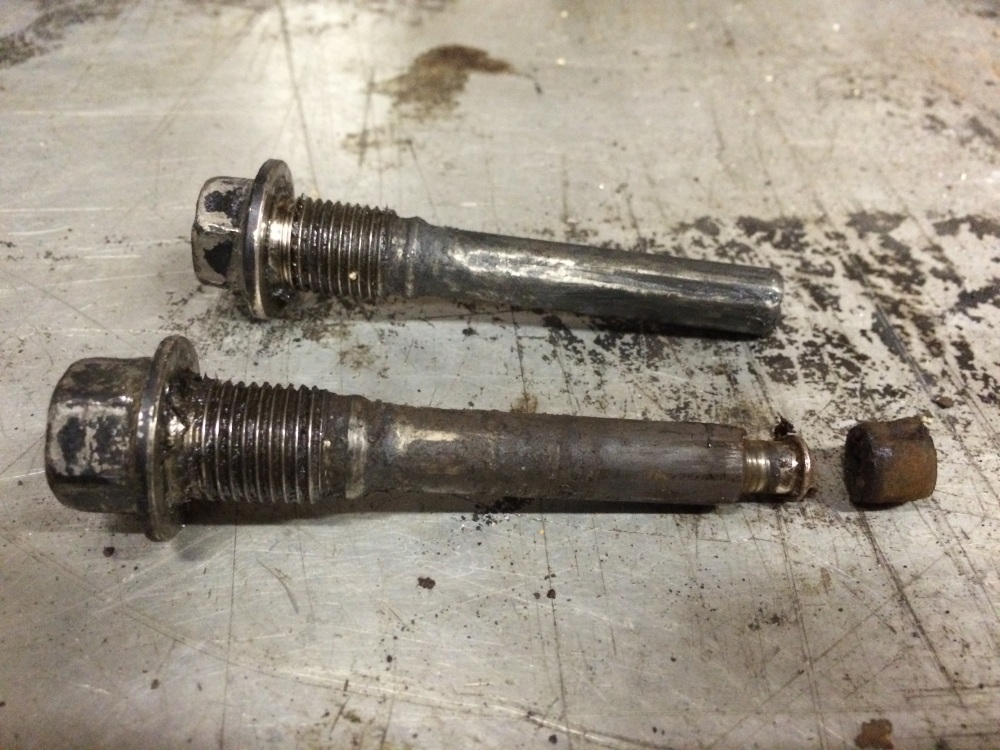
Why Is There a Rubber Sleeve on the Lower Brake Caliper Bolt?
If you have ever had the pleasure of doing a brake job on a rusty car before, you have likely encountered the engineering nightmare that is known as a “lower brake caliper slide bolt.” Now, if you have erased this hardware-laden memory from your brain, or aren’t familiar with this style of bolt, I’ll do my best to help out.
This is the type of bolt that doesn’t want to come out of its hole because rust has essentially fused it with the brake caliper bracket. It’s the bolt that gives you a few hope-filled turns with a pipe-extended, half inch drive ratchet, and then crushes your dreams when it becomes stuck solid for absolutely no logical reason. It’s the threaded evil that requires a chisel and sledgehammer to remove when the ratchet fails to do its one job. Yep. That’s the bolt we’re talking about here today.
A Theory: The Brake Caliper Slide Pin Rubber Is an Anti-Rattle Device
If you have ever successfully removed this bolt (which not many have in the Northeast), you know that it has a rather cute little rubbery sleeve on the end of it as if to mock each one of your herculean removal efforts. The upper caliper bolt does not have this cute rubber sleeve, so why in the world did the car manufacturer put one on the bottom caliper bolt? The truth is, I don’t have an answer for that. However, I have spent quite a few late night hours in search of the truth, and I’m now here to share with you the one theory that makes the most sense to me.
These cute little rubber caliper bolt “sleeves” (that’s the most common name for these) are anti-rattle devices for the calipers. The sleeve provides additional friction, which prevents the brake caliper from rattling/chattering within the confines of the caliper bracket. It works similarly to a shock absorber, where it slows down and dampens the movements of the calipers.
As long as the whole system stays rust-free and lubricated, it’s truly a simple and effective system. However, when that rubbery sleeve prevents the caliper bolt from sliding, or rust begins pulling the vehicle back into the earth, all bets are off.
What Do You Think?
So does this theory make sense? Do you have a better explanation of what the rubber caliper bolt sleeve actually does? Tells us in the comment box below.
Learn to Fix Your Car
Learn how to diagnose and replace parts on many makes and models. 1A Auto has thousands of how-to videos with step-by-step instructions and tips from professional mechanics.
Related Content
- How to Bleed Brakes By Yourself
- Why Are My Brakes Sticking?
- Recycling Waste Fluids and Oils? How to Dispose of Motor Oil, Antifreeze, Brake Fluid, and More
- How Long Do Brakes Usually Last?
- Different Types of Disc Brakes
- When Should Brake Pads Be Replaced?
- Do I Need to Turn Rotors When Changing Brake Pads?