Beginner Car Tips You Need to Know

Starting your first car project can be a tall order, even for the smallest of tasks. Here are some tips you’ll wish you knew before you started.

1. Start Small, Take It Slow, and Go One Step at a Time
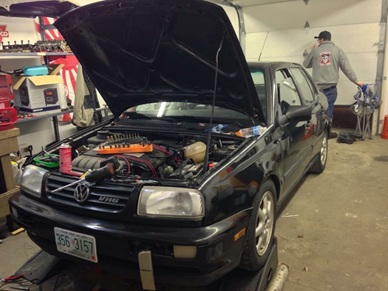
Project cars take time you don’t have and money you aren’t comfortable spending. If the day comes when you decide to build a purpose built race car or restore a ‘55 Chevy, the budget and time frame you have in mind won’t cut it. It all takes time, patience, and an understanding of your goals.

We’ve all seen ads online of projects being sold by the dozen—“Lost interest;” “No time, could use the money;” “My loss, your gain… need garage space.” The ever-so-common broken dream project that you thought would take one year is now going on its third, and it cost you a small fortune and at least one relationship.

My best advice for a first time project is start small, especially if you have a perfectly good car you want to tear apart. Nothing is worse than partially building a car that ran and drove until you touched it and are now selling it for a fraction of what you purchased it for. Instead, do small bolts-ons or visual modifications, and slowly move towards more time consuming projects. Complete your initial work before deciding to take on a “while I’m in here, might as well” type attitude. When you go down that rabbit hole, you will not come back.

Read More

Formula Drift: The Next King of the True Grassroots-Gone-Mainstream Motorsport

Ryan Tuerck’s Toyota FRS at NHMS
(Ryan Tuerck’s off season Toyota FRS at NHMS during an HIN event)

Drifting is an uprising motorsport that has grown enormously in the past five years – a sport that has made a handful of professional driver’s careers and furthered the reputation of others. Drifting has a large presence within the younger community, bringing regulated off-the-streets motorsports back into a common youth sport. The Formula Drift league has a firm grasp on its media presence, live-streaming current-season events, and threatening to take air time from other cable television motorsports.

You may be wondering why I call this the next true grassroots motorsport. Other basic motorsports, like autocross and drag racing, have always been open to the public; however, taking your car to the next level while feeling like you are competing at a near professional level without large brand funding has never felt farther away, at least until drifting gained traction. The use of mass production chassis and rules on suspension and drivetrain orientation make it seem like the car in your driveway has a chance against the pros’ cars. Don’t let this fool you, though. Major brands still back the budget on those big name, tire-shredding monsters you see on your screen during the season.

Read More

How to Tear Down a VR6 Long Block Engine

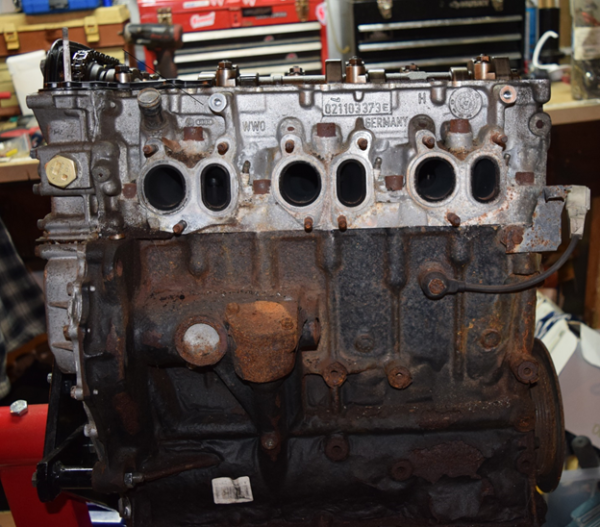
This is a 12 valve 2.8L VR6 engine out of a 2001 Volkswagen Jetta. This engine can be particularly complicated to tear down due to the rear engine timing and the need of a few special tools. Having a rear timing camshaft makes for some difficulties when removing the lower timing cover. For this, there are stand adapters for the mounting points to be moved to the side of the engine instead of using transmission mounting points. In this article, we will be using a regular transmission mounting point.

Tools Required:

  • Basic Metric Socket Set
  • Large breaker bar
  • Impact gun for balancer bolt (optional)
  • 5mm Allen key
  • 6mm Allen key
  • 12mm deep triple square socket
  • 10mm triple square socket
  • 27mm Socket (For the timing chain tensioner & harmonic balancer bolt)
  • Dead blow hammer or rubber mallet
  • Permanent marker
  • Plastic zip lock bags of various sizes
  • Flat head screw driver

Step 1: Index, Tag, and Organize the Engine Parts

To start, you want to simply remove all accessories, pulleys, and other pieces to get the engine down to just the long block. Then drain all the fluids.

NOTE: The intake manifold uses a 5mm hex bolt (i.e. Allen head bolt). You will need a 5mm hex socket driver with extension or a long T-handle style hex driver to remove these.

Once your block is reduced to a long block, you are now ready to tear down your engine. Before writing this article I had already reduced this engine to a long block, so all photos were taken after that point.

Before you start unbolting things, most overhead camshaft engines will have a particular order for removing parts. It is not as simple as going from top to bottom. The first step is to get your permanent marker and plastic bags. The most important rule for an engine tear down is to index, bag, and tag everything you remove. This is particularly useful if you plan to re-assemble it in the future. This is also a good time to loosen your crank bolt with an impact gun. Having the resistance of the rotating assembly and valve train will aid in getting that bolt loose.

Step 2: Remove the Valve Cover

The front of the engine will have two long studs, and you will need a deep socket or an open-end wrench to loosen them. These VR6s have the plastic version of the valve cover and can be brittle depending on the engine’s age. Use a soft mallet to tap on corners of the cover in conjunction with plastic pry tools if needed.

Read More