Wondering what the sleeve on the lower brake caliper bolt does? This article reviews what the lower brake caliper bolt’s slide pin rubber is and it’s purpose.
Why Is There a Rubber Sleeve on the Lower Brake Caliper Bolt?
If you have ever had the pleasure of doing a brake job on a rusty car before, you have likely encountered the engineering nightmare that is known as a “lower brake caliper slide bolt.” Now, if you have erased this hardware-laden memory from your brain, or aren’t familiar with this style of bolt, I’ll do my best to help out.
This is the type of bolt that doesn’t want to come out of its hole because rust has essentially fused it with the brake caliper bracket. It’s the bolt that gives you a few hope-filled turns with a pipe-extended, half inch drive ratchet, and then crushes your dreams when it becomes stuck solid for absolutely no logical reason. It’s the threaded evil that requires a chisel and sledgehammer to remove when the ratchet fails to do its one job. Yep. That’s the bolt we’re talking about here today.
A Theory: The Brake Caliper Slide Pin Rubber Is an Anti-Rattle Device
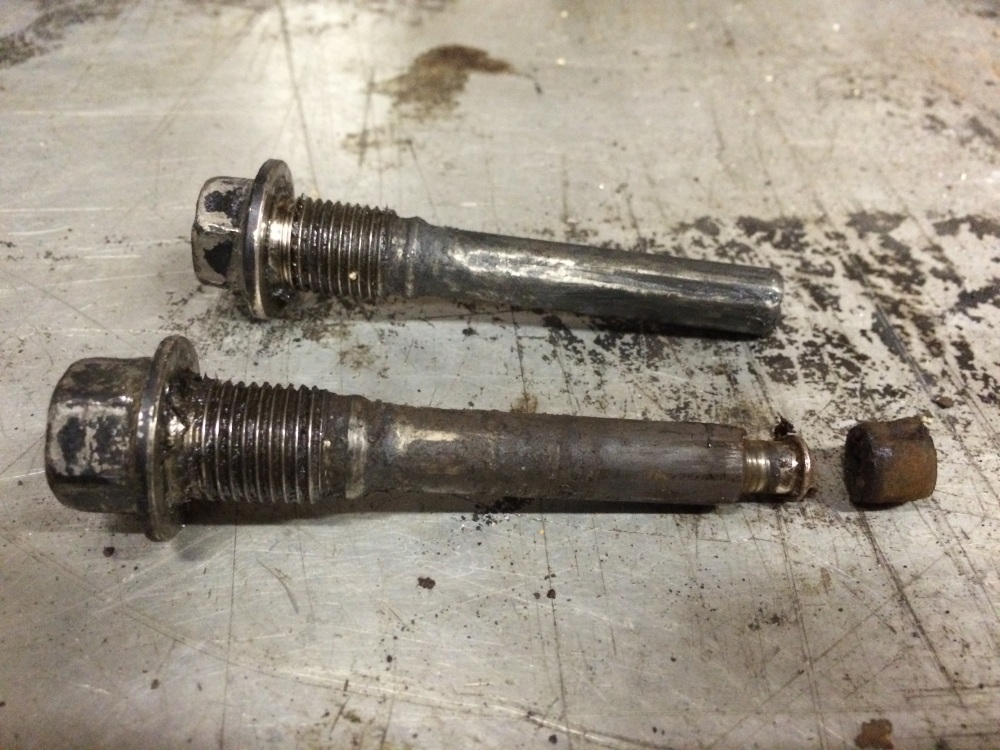
If you have ever successfully removed this bolt (which not many have in the Northeast), you know that it has a rather cute little rubbery sleeve on the end of it as if to mock each one of your herculean removal efforts. The upper caliper bolt does not have this cute rubber sleeve, so why in the world did the car manufacturer put one on the bottom caliper bolt? The truth is, I don’t have an answer for that. However, I have spent quite a few late night hours in search of the truth, and I’m now here to share with you the one theory that makes the most sense to me.
These cute little rubber caliper bolt “sleeves” (that’s the most common name for these) are anti-rattle devices for the calipers. The sleeve provides additional friction, which prevents the brake caliper from rattling/chattering within the confines of the caliper bracket. It works similarly to a shock absorber, where it slows down and dampens the movements of the calipers.
As long as the whole system stays rust-free and lubricated, it’s truly a simple and effective system. However, when that rubbery sleeve prevents the caliper bolt from sliding, or rust begins pulling the vehicle back into the earth, all bets are off.
What Do You Think?
So does this theory make sense? Do you have a better explanation of what the rubber caliper bolt sleeve actually does? Tells us in the comment box below.
Learn to Fix Your Car
Learn how to diagnose and replace parts on many makes and models. 1A Auto has thousands of how-to videos with step-by-step instructions and tips from professional mechanics.
Related Content
- How to Bleed Brakes By Yourself
- Why Are My Brakes Sticking?
- Recycling Waste Fluids and Oils? How to Dispose of Motor Oil, Antifreeze, Brake Fluid, and More
- How Long Do Brakes Usually Last?
- Different Types of Disc Brakes
- When Should Brake Pads Be Replaced?
- Do I Need to Turn Rotors When Changing Brake Pads?
