Think your Subaru has turbo problems? This post reviews how to find out after the owner’s turbo shaft broke in half for not replacing the banjo bolt and its filter. Learn a simple way to prevent turbo problems on your Subaru and a simple way to fix this one if yours has the banjo bolt and filter and you’d rather not replace it with a new one.
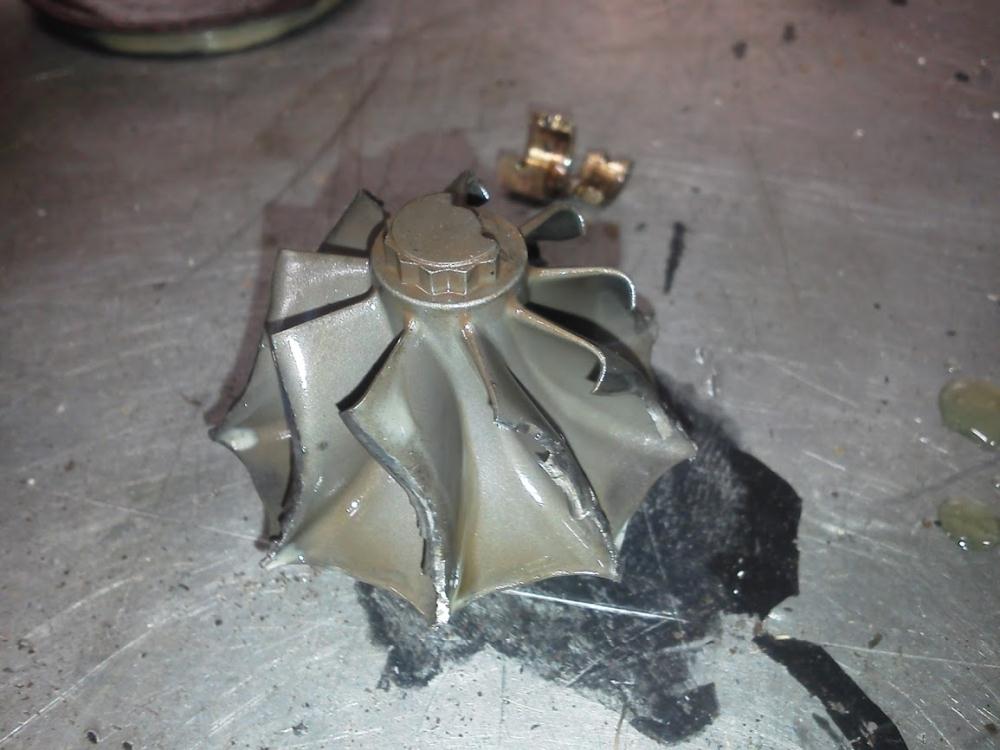
Why Does My Subaru Have Turbo Problems?
Those of you that follow the 1A Auto Blog may remember the 2006 Subaru Legacy GT project car that I bought a few months ago. If not, you may want to start off by reading Part 1 and Part 2 of the project before jumping ahead first into today’s post. Then again, maybe you just want to dig right into the meat and potatoes. For that, I can’t blame you. In fact, that makes you a straight shooter, and that’s what I’ve always liked about you.
Okay. The new-ish VF40 turbo on the 2006 Legacy GT destroyed itself in hellacious fashion recently. Yes. It was quite an experience that I won’t soon forget. Raining, muddy, on a steep hill, on a high speed road, and then shrouded in disappointment from my “towing service” who shall remain nameless. If I had only known a month ago what I know now, this horrible event would have definitely been avoided. So now I want to inform turbocharged Subaru owners far and wide of this absolutely simple maintenance that can make a destroyed turbo totally preventable.
For me, I can only blame myself for not researching this car & the EJ25 engine more, because this info is already out there if you just search for it. Sadly, I just didn’t realize that I needed to. Research, research, research when you buy a car that you are unfamiliar with. Hit the car forums. Ask the people that drive them. Be your own automotive advocate. It WILL save you cash and stress.
A Bad Banjo Bolt with a Filter
Now let’s get to the good stuff! Once the red beauty was towed home and placed in the dry, loving surroundings of the garage, I found that the shaft inside the VF40 turbo had been completely starved of oil, and it broke in half at the center bearing. This left the turbine wheel dancing around inside the turbine housing, which is never optimal for peak performance. With the engine running, the sound could have been mistaken for somebody feeding steel chains into a wood chipper. I immediately asked myself “how the heck did this happen?!” The car had brand new oil in it, only about 2,000 miles on the oil that I got it with a couple of months ago, and I knew that the previous owner took amazing care of this car because she loved it. I hit the internet in search for the answer.
Much to my surprise, there was 350+ page thread on Legacygt.com that discussed this exact problem in detail, because hundreds of other Subaru owners have had the same exact problem as me. The cause – the banjo bolt (also known as a “union” bolt) that is part of the oil feed line to the turbo. Inside this banjo bolt is a tiny little (stupid) filter. Over time, this tiny little filter does its job and filters contaminates from going into the turbo. Great, right? No. Not so much. Because most people rarely, if ever, replace them. Left untouched for too long, the filter becomes clogged, and your turbo is starved of oil, which quickly leads it to an early death.

An Alternative Solution to a New Banjo Bolt
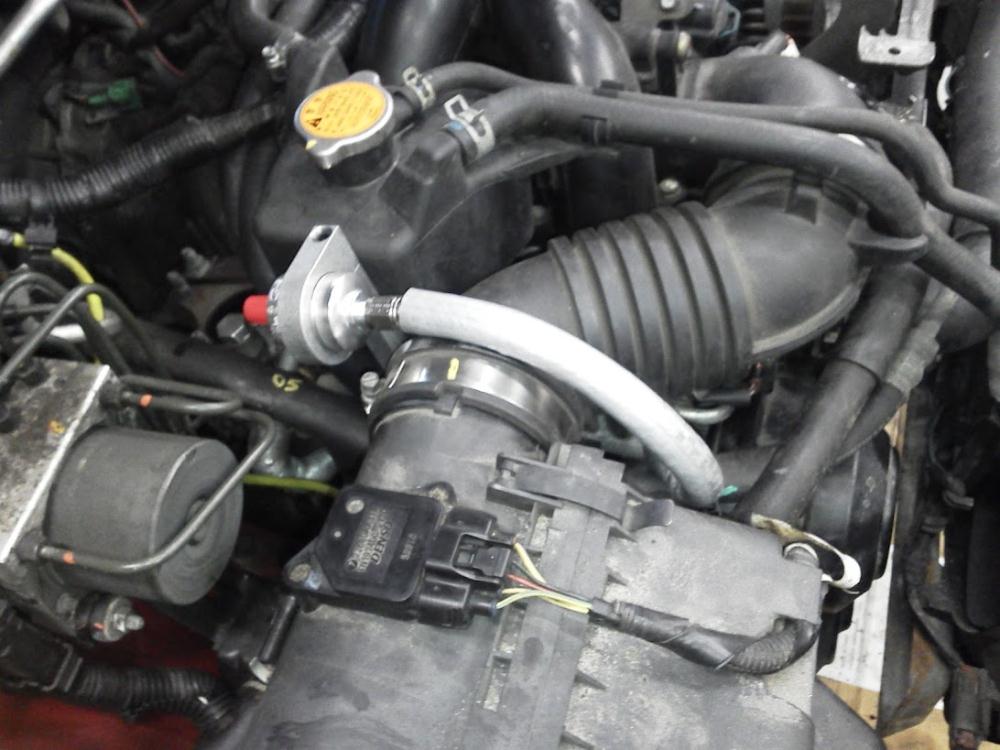
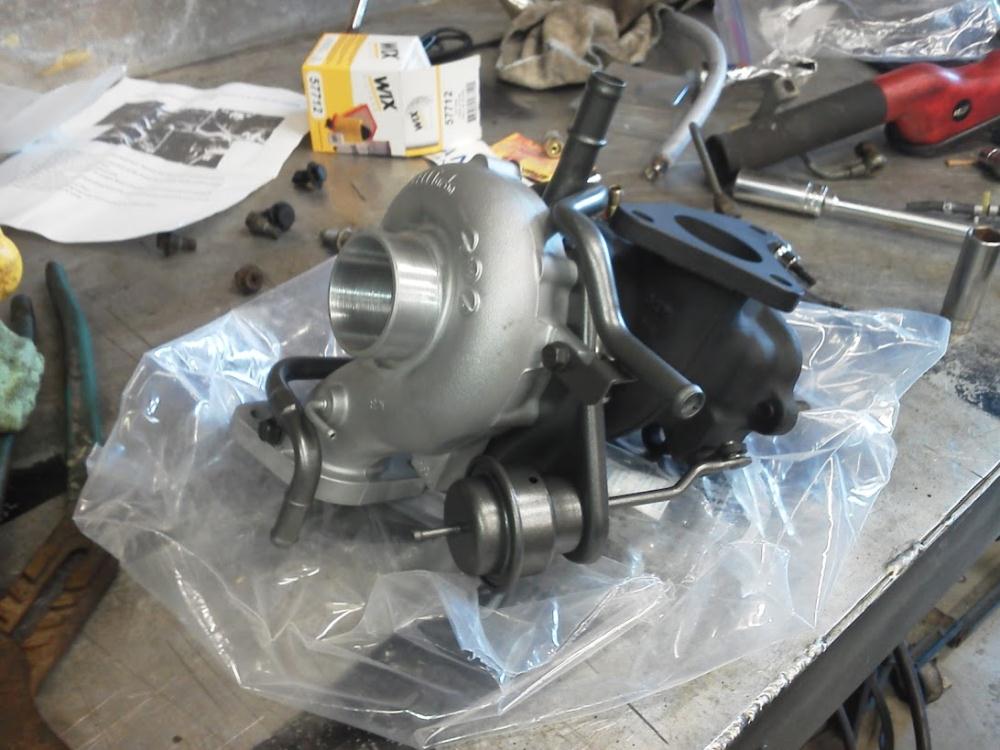
Needless to say, I am no longer a fan of this bolt or the filter that lives inside it, and I decided that there was no way that I was replacing it with the same style system. There just had to be something better out there, like maybe an oil feed line with a washable filter, and more oil volume? HUZZAH! The internet saved the day again! A company called “Infamous Performance” in California created an oil feed kit that appears to be far superior to the factory system. The kit that they sell completely eliminates the factory oil feed, and grabs engine oil from a “better” location. It also has a terrific looking, larger oil filter than can be cleaned out easily at your leisure. Since I also needed a new turbo, I went with a hybrid 16G VF40 from BNRSupercars. Both parts got to me fast, and worked perfectly without any drama whatsoever. The car now is now fixed, the birds are singing, and a beautiful red 2006 Subaru Legacy GT is back on the streets again.
Do All Turbocharged Subarus Have a Banjo Bolt?
Now, for those of you with turbocharged Subarus, don’t freak out yet. The first step is to find out if your car even had this banjo (union) bolt with the filter inside it (Not all Subarus do. In fact, the majority don’t.). For the cars that do have it though, it is located on the back of the passenger side cylinder head, and it holds down the turbo oil feed line. A super helpful Subaru owner known as “niemkij” on iwsti.com did a fantastic write-up of how to replace one of these bolts yourself. Currently, a new “union” bolt is around $17 new from a Subaru dealer, and probably take between 15 minutes and an hour to replace, depending on your level of expertise.
For all intents and purposes, replacing this banjo bolt with a new one from the dealer is all you really need to do. I go overboard on everything that I do, so I went with the whole new feed line & fancier turbo instead of the OEM stuff. The moral is, this tiny little turbo oil feed filter needs to be replaced on a regular basis. If you don’t replace it, or don’t know when the last time yours was replaced, you may be risking more problems with the turbo in your Subaru. Check it out, and report back your findings. I want to hear about your Subaru.

Learn How to Diagnose and Replace Parts on Your Subaru
Learn how to diagnose and replace parts on your Subaru and other makes and models. The 1A Auto video library has thousands of how-to videos with step-by-step instructions from real mechanics.
Related Content
- What Are the Symptoms of a Bad Turbo?
- My First Car: 1983 Datsun 280ZX Turbo
- Dirty Air Filter or Bad MAF Sensor?
Shop Parts and Tools

Great write up. Thank you. I heard of oil starvation with the 2010 Legacy GT that I own. If I buy a banjo bolt from the dealer are they hard to change yourself??
Hi James,
I have only dealt with the 2006 LGT, so I’m not sure what the 2010 is like, or if they still use this same style oil banjo bolt (hopefully they don’t). I think I could probably swap the one on the 2006 Legacy in about 15-20 minutes now. The trickiest part is getting the copper washers back onto the bolt during reinstallation. They tend to fall down and land on top of the subframe. Fishing them out is a hoot. I would recommend checking out http://www.legacygt.com, and http://www.nasioc.com/ if you haven’t already. Both are terrific resources for Subaru information.
I just blew my turbo in my 06 legacy spec b. Took it apart looked at the banjo bolt low and behold no filter in sight. I think it blew into the turbo. I’m looking around for a turbo for the best price. Any suggestions?
Hi Dan,
Unfortunately I don’t have great advice on where to grab a new turbo. It looks like the BNR supercars website is down at the moment (http://bnrsupercars.com/). I had a great experience with them, but it was years ago now. I’d recommend hopping on a Subaru forum and checking to see where people are buying new turbos these days. I’m sure they would have some great sources for you, maybe even local to you!
Good luck! – Jeremy
You seem knowledgeable about the subaru engine problem, hope you can point me in the right direction: Our 2009 Forrester turbo just threw a rod at 75k miles and we are trying to figure out what we should ask for from the dealer and/or Subaru. We bought it used two years ago. We know that there was a stop selling order issued from subaru in April 2008, do you happen to know if that order is still in effect? If not when it went out of effect/ If not you, who might know? WE’re looking at estimated 9k to replace the engine, should we do it or just junk the car? WE are out of warantee, but it seems like the dealiership/subaru should take some responsibility , what are your thoughts on what we might expect from them? Thanks for all help. Nancy Schleich
Hi Nancy,
I’m sorry to hear about your engine. Unfortunately after 75K miles, on a used car, it could have been lack of maintenance or abuse by the previous owner that caused the failure, and not necessarily a manufacturer defect. Both are pretty tough to prove. I would recommend going to a respectable private repair shop and get an estimate, because $9000 is too much to spend on a 7 year old car in my opinion. They may even give you an estimate over a phone since it is a straight-forward job without any diagnostic work. You could ask for two different estimates too, one with a new Subaru engine, and one with a junkyard engine. Junkyard engines are usually warrantied for 60 days, but it would be significantly cheaper than a new one from Subaru. You do take some risk with it, so you’d have to weigh that out. If you feel really bold, you could join the http://forums.nasioc.com/ Subaru forum, and see if any of the local Subaru experts could help you out. A trustworthy backyard mechanic could probably get your car going again for a few grand. The tricky part is finding the right person to do that. Starting with a private garage is probably the best idea though.
Good luck and feel free to keep us updated!
-Jeremy
Hi Nancy,
Same issue I have, what was your outcome?
Kind Regards
Karen
Jeremy
I am buying an 04 Baja Turbo and was hoping you can help me find the bolt with some pics. I’m going to see if it’s possible to do myself but need a visual of where it’s located. Any help would be greatly appreciated!
Most of the Subaru clubs are saying remove the banjo bolt screen altogether, run synthetic oil and change the oil and filter every 3.5 k miles. Their logic is dirty oil provides more lubrication than no oil.
If you have a pick it’s also possible too pull the screen inside the bolt out and the problem is solved for free. even dirty oil is better than no oil.
I thought subaru stopped putting the banjo filters in after 2006, much like the uppipe cat but as was stated legacygt.com will have it answered or someone will answer it for you.
Ryan, that’s a great point. Many people do rip the filter right out and pretend it never existed. I thought about doing this on my car, but the company that I bought the turbo from recommended the feed kit that I used, so…I ran with the idea.
BUT, contaminants WERE kept outta duh turbo…doncha just luuuv engineers!
Yeap, it was totally free of dirt & oil, that’s for sure!
Once upon a time and a Volvo, I succumbed to an add spouting the wonders of silicon engine restorer. WELL it clogged the oil sump ‘filter’ (guess it was there to keep odd engine internals out of the oil pump) oil pressure went to zero, clackity-clack before I shut ‘er down, got a trailer, and took it home. De-babited the mains,spewed glitter throughout, and got into the crank on one main. Thirty eight dollars, some 1000 grit shaft tape, and a day later the bomb was back on the road…sans the sump filter. Lot cheaper than a turbo…look on the bright side, time to upgrade to a triple turbo anyway!
Hi, same thing happened with my 2005 LGT Wagon. However my Banjo bolt was clean after 132k! The problem with mine was the Oil Control Valve also available at Infamous. They sell them at $80 each (Dealer: $130ea) with very easy install. I replaced both to be safe. Have the same BNR 16g now.. NIIICE turbo!!
am buying a used subaru GT legacy 2006 with 100k miles to it. Is there any reason to be worried about?
Hi Sande,
From my perspective: If you are buying a 2006 Legacy GT with 100K miles, you will want to know if / when the timing belt and water pump were replaced, because they are due to be by 100K miles. You will also want to replace the filter that I talk about in this post. I’m sure the local Subaru dealer will know what you are talking about if you ask them to replace the “turbo oil feed filter”. If the one in your new vehicle has never been replaced – replace it! Also – be sure to change your oil frequently, because if you don’t that little filter will clog, and your turbo will implode. Other than that – they are great cars! 🙂
Hi, Jeremy you seem to know what you’re talking about, so here it goes. I have an 05 legacy 2.5 GT and I just had to replace part of my turbo, apparently a bearing broke and killed my turbo (the bearing inside the turbo) is there any way that I can help this from happening again my car is just over 101,000 and it’s a beautiful car, good engine and transmission, but I may have to sell if I can’t find a way to make sure this doesn’t happen to the turbo again, if there’s anything you know that I can do, please let me know!
-Jess
Good morning Jess!
A well lubricated turbocharger will last a very, very long time. If it isn’t lubricated properly, the bearings wear, and the turbo basically eats itself from the inside out. 🙁 So, if your previous turbo just had a bearing problem that destroyed it, it was likely starved of oil for some reason. If I were you, I would make sure that you replace that union bolt / filter that I mentioned (and showed a picture of) in this blog post above. The hose that feeds your turbo fresh oil has this “union bolt” in the middle of it with a mini filter inside. When that filter clogs, it starves the turbo of oil, which then kills it. So if you haven’t/don’t change this union bolt, then your new turbo may face the same oil starvation issue and die an early death like the first turbo did. For what it is worth, I believe Subaru is recommending that these union bolts are changed every 30K miles now. They are only about $17 at a dealer, and it is very easy to replace. I can’t imagine a shop charging more than an hour to swap it out on your car.
With all that being said, the reason that these filters inside the union bolts clog is age / dirty oil. If you leave these filters in too long and don’t change them every 30K miles like Subaru (now) recommends, then the filters will clog up and you have turbo issues due to oil starvation. Also, if you go way too long between oil changes, your oil becomes too dirty and it can clog a perfectly good filter.
So the short answer is: Change that union bolt if you haven’t done it already, and always do oil changes on time, don’t push it longer. I would recommend every 3000 miles, but that is a highly debated topic that nobody agrees on. (All of my cars get 3000 mile oil changes for reference 🙂 )
Good luck, and feel free to keep me updated on the progress!
i want to acquire a Subaru turbo charged 2003 what should i know about it ?
Does the WRX STi from 2004 have this bolt? I think it does have the VF40 but I am not certain.
Hi Jack,
I’m actually not sure if the 04 STi has this bolt or not. I’d recommend hopping on NASIOC.com and asking the guys/gals on there. That is by far the biggest Subaru community out there.
On my 2009 GT my turbo just went and I have metal in the oil pan. Do I just need to replace the turbo and oil feed like you did? Or am I looking a whole engine rebuild?
Hi Doug,
That’s not a fun situation to be in at all. Your repair approach is sort of a judgement call / gamble depending on how much metal is/was in the oil pan, and what the condition of the rest of the engine is. At the very least, you need a new turbo, a new union bolt/filter (I would always recommend a better oil feed line to the new turbo instead of that terrible factory oil feed system), and an oil & filter change. Then you will want to do another oil & filter change very, very soon after (maybe just a few miles miles?). Then clean or replace the union bolt/filter again probably. You really don’t want any metal floating around your oil.
There is a fair bit of risk involved if you only replace these filters / turbo / oil because if there is still metal floating around inside your engine, you may destroy the new turbo as well. If metal made it into your main or connecting rod bearings, you could develop an enjoy knock soon.
There are also two other union bolt / filters that control oil going to your cams. If they are clogged with debris, your cams could potentially be starved of oil as well. So replacing those union bolts would be smart too, but they are buried deep behind the timing belt covers if I recall correctly. (read – “labor intensive job”)
I think the short answer is: It will be an expensive repair no matter what – how big of a gamble do you want to take? 🙂
Same thing just happen to me what did you do?
My 2006 Subaru GT Legacy turbo blew up on me this past weekend. I was not happy to find out that I needed a new turbo.I have always gotten frequent maintenance on this car(oil changes, etc.)and was shocked that this happened. I wish I found this article earlier! I am very interested in the bnrsupercars.com turbo for my car. How much more power did you find it gave your car? If I have to get a new turbo, I want it to be good!
How many miles were on your car when the turbo blew up?
Hi Liz,
When I first bought the car, I think it had around 140,000 miles on it. It also had a burned exhaust valve and a newer turbo at the time. I took it apart, pulled the engine out, rebuilt the cylinder heads (See this-> https://blog.1aauto.com/2012/03/14/subaru-legacy-gt-limited-part-2/), and got it running again. The “newer” turbo then died a premature death at about 150,000 miles due to the now-famous turbo oil feed line filter being clogged. The mileage itself isn’t so much the issue to worry about. The condition of the oil, and oil change frequency is the factor that matters, because that is what clogs up these miniature oil filters.
Moral is: Change these banjo-bolt oil filters on your cars and you’ll probably be fine. They are in the oil feed line going to the turbo (pictured here), and they also filter the oil going to the cams. Changing them all is good insurance. I believe there are 3 of them if I recall correctly.
I would like to also add to my above comment, is it wise to purchase the turbo oil supply line kit if I buy the new turbo from bnrsupercars?
Hi Shelby,
I’m not sure how much power it added, but the new turbo definitely makes the car pull very nicely! If you buy the turbo from BNRsupercars, I believe he will only warranty it IF you buy the new oil feed/filter line system from Infamous Performance. (They both are very aware that the factory oil feed/filter system on these cars is terrible). I bought the new turbo and oil feed/filter, and both companies were absolutely terrific in every way. I have absolutely no affiliation with either by the way, other than buying these parts from them.
Good luck, and feel free to let me know how it all works out!
-Jeremy
Hi Jeremy
I am the prous owner of a 2009 Subaru LGT 2.5 manual transmission. I have had a several instances where I will need to accelerate to get around another car. Press on the gas and the eingine rpm will rev up really high and drop off. Mind you I am not stomping on the accelerator, but even if I was, this doesn’t seem like this should happen in a higher gear going 60mph down the freeway. It seems this can happen in any gear or in sport or intelligent mode and there is a horrible acrid burning smell afterward. I thought it was possibly clutch slippage, but I don’t have the clutch engaged (no need to do so) and there is no screetching or whine as you would expect to hear. I’ve been driving maual transmisssions since I started driving over 25 years ago so I feel really comfortable with manual transmissions. Having read through some of the info that is out there, I’m nor sure if I have a trubo issue or if it’s a clutch issue. I did have my oil change about a month ago and swithced to synthetic, but this had happened before that swith was made. Now I just have this weird rpm variance.
Any info would be great.
Thanks,
Lisa
Hi Lisa,
How many miles are on your car? To me, it does actually sound a lot like a clutch slipping (Sorry to be the bearer of bad news). On a turbocharged (read: “high torque”) car like yours, it isn’t too outside-the-norm for a clutch to be worn out at a much lower mileage than a non-turbo model. Also, clutches don’t necessarily grind or squeak until they have no material left on them. Most slipping clutches will engage very normally in low gears/low speeds, but begin slipping in higher gears/higher speeds when you hit the gas. A worn clutch may also cause the clutch pedal to “grab” closer to the top of its travel (near the dashboard), rather than the bottom (near the floor). Does this sound like your car?
I checked out one of the bigger Subaru Legacy forums, and found this post about a car similar to yours with 46K miles and a slipping clutch. Needless to say, the owner was less than happy. But it does prove that it is possible with these cars.
(Note: skip over any childish banter in this post, as there is some decent info as well.) http://legacygt.com/forums/showthread.php/05-legacy-gt-clutch-slipping-46k-milesiii-103974.html
Now, a clutch can slip because of a variety of reasons other than just being worn out. Like a stuck hydraulic slave cylinder, or leaking oil/antifreeze on the clutch disc, or a damaged pressure plate, or damaged throw-out bearing, or miss-adjusted clutch pedal. So, it is worth having somebody knowledgeable and trustworthy diagnose it in person before throwing down the cash on a new clutch. Lastly, I have seen a weird scenario on a different model AWD turbo car that acted exactly like a slipping clutch. It was a broken rear axle. The owner was 100% sure that the clutch needed to be replaced and brought it to me to do. When I checked out the car, I found the rear axle had looked totally normal, but was actually broken behind the axle boot. This caused the center differential to act like a slipping clutch. Replacing the axle was about $100, which the owner was thrilled to pay.
Oh, and if it makes you feel any better, I actually just replaced the clutch in my Mazda Rx8 at ~53,000 miles because it was slipping badly, and it was having the same rev up-drop off, slipping at high speed, smelly condition as yours.
I hope that helps, and feel free to keep me updated, as I would love to know how it plays out.
-Jeremy
p.s. I’m fairly confident your turbo is safe, for now. 😉
Hey Jeremy,
Great article and valuable information. I have an 05 Outback needing its 2nd turbo replaced, and I’ve read a lot about the VF40 sucking and BNR 16G being the replacement. Thinking BNR and Infamous is the way to go, but I haven’t read any long term results with that setup. How many miles are on you BNR turbo now?
Hi Dusty! I actually ended up selling the car to a family member that fell madly in love with it. I know that it is still driving around happily, but I will get the current mileage stats, and report back ASAP.
Hi Dusty! Here is the update: The car has gone about 21,000 miles since I repaired the valves, and probably about 19,000 since the turbo swap. As of right now, the car is still performing perfectly. The owner is also doing ~4000 mile synthetic oil changes if you are curious.
Mine Just Blew. 2005 Legacy GT. Sudden Failure. 80,000K, Oil Changes, Manufacturer Recommended. Then, about every 4000-5000K with semi synthetic oil. Sudden Failure. No Warning. I checked oil and transmission two weeks prior to 400 mile round trip, all were fine. CLASS ACTION LAW SUIT?
Glenn
What does a failing turbo sound like? I have a 2005 Legacy GT which is now making a whining noise at 4 rpm in park & while driving. It is an automatic. I’ve always changed to oil regularly with synthetic. Could this noise possibly be the turbo? There is no loss of power either.
The whining sound could possibly be the wastegate solenoid valve. Mine was making a whining noise at partial throttle, and after I swapped out the solenoid, the noise went away. It’s a $20 part, and is right at the front of the motor (5 minutes to swap it out). Might be worth a shot.
So i just Read simply purchased 8 2005 Subaru 2.5 GT and I’ve already had an accelerator pedal sensor go out which was causing issues with the power. So yesterday I had my mechanic do the calibration on the accelerator pedal which was underneath the – behind the glove Box and I believe it should be in synchronize now. But I didn’t finding it hard to get past 3 rpms My car has a lot of drag to it and just doesn’t wanna go Lake it did a couple weeks ago I’m not sure what to do it idles kind of rough and it seems to be always running a little bit hot and smells like it’s hot as well can anybody help me with this situation and let me know what they think please. I have new spark plugs ready to be replaced I have a new thermostat ready to be replaced and struts being put on I just had an oil change in new oil filter put on As well.
Hi Breanna, having a technician that is familiar with Subarus, or at least turbocharged cars is a great start. Assuming you don’t have a check engine light on, it sounds like you should start with basics. Make sure you have a clean air filter, make sure your brakes aren’t dragging, and hook up a boost (pressure) gauge to your engine to see if the turbo is doing it’s job making pressure. If you smell burning, chances are good that something is in fact burning. Brakes? Clutch (if it is a manual)? Something under the hood? Catalytic converter? Diagnosing this really could go so many different directions. I’d find yourself a trustworthy Subaru technician and go from there. Hopefully it isn’t burned valves or a damaged turbo like I dealt with in this blog post. Neither are super fun or cheap. That being said, after I fixed the Legacy GT in this blog post, I ended up selling it to a family member who then put 100K+ additional miles on it before trading it in. It was a really, really, fun, fast, reliable car.
I am looking at buying a 2005 subaru forester xt that says turbocharged, has 113,606 miles on it. How do I know if it has this banjo bolt? Thanks
How many miles were on your subaru when this happened? I own a 2006 Legacy GT & and i’m the process of buying a 2008 Legacy GT as well….just wondering when this bolt should be replaced…
Hi Jeremy,
Just bought a 2009 subaru forester xt automatic. Since I drove the car it has been making similar sounds of feeding loose chains into a wood chipper. Then when I’m driving at 80km/h cruise speed makes no sound and turbo seems to not respond like its dead. Sort of a load whineing sound.
Then took it home tried to find out if the sound is from the turbo and starts noticing smoke coming out from the rear (exhaust) thought mayb turbo is blown ??
Had a friend come out who has a obd11 scanner said his computer said something about the turbo/solenoid not 100% sure
Is there still a chance to save the turbo or would I need to replace it
Thanks heaps for your kind advice.
Hello Imad,
Unfortunately, it kind of sounds like your turbo is totally dead. I would recommend bringing it to a respectable repair shop in your area and having them confirm it. I don’t want to scare you any further, but if there is also smoke coming out your exhaust, you are also burning some type of important fluid – either oil or antifreeze. So you may want to run out to the driveway right now and check the level of both. Most likely, one of them will be very low. When a turbo dies a violent death, it usually does begin to burn oil and/or antifreeze depending on how it breaks, so your situation sounds quite standard from what I have seen. Regardless of which fluid you are burning and spitting out your exhaust, you will want to get this problem corrected as soon as possible before it begins to do more damage to the rest of the engine.
Sorry to be the bearer of bad news. 🙁 Good luck!
-Jeremy N.
Hi Jeremy,
I just read your thread on the Subaru Turbos. I can attest to the fact that a clogged screen will take out a turbo really quick! However, Subaru did continue to put screens in their banjo bolts in 2006. Mine is a 2006 Baja Turbo that was bought new in 2007, from the dealer. Oil changed every 3,000 (4,000 at most) and still lost a turbo. New question: I have annoying oil leak.; It does not matter what type or brand of filter used, oil runs down the side. Bosch is the closest to not leaking if you tighten it more that I like to. Any suggestions? *I hate using the dealer for anything.
Hi Kerry,
Sorry to hear about your turbo, I have been there and I feel your pain. 😉
As for the oil leak – I would start by cleaning the whole oil filter area of the engine with some brake cleaner or something similar. Then drive the car for a day and double check the oily area. While it could be the oil filter seal leaking, it could also easily be a gasket/seal right above it. That area of the Subaru engine has a lot of gaskets and seals. I know this because on my Legacy GT, after I rebuilt everything and replaced the turbo, I also ended up with an oil leak. Mine turned out to be a cam seal that wasn’t sealing properly (even though it was brand new – Grrr!). It was a total bummer to fix because the timing belt had to come back off again. Hopefully yours isn’t a cam seal. That said, yours could also be a valve cover gasket, a banjo bolt, or maybe even something up higher dripping down into the oil filer area. The only way to be sure is the clean the area really, really well and follow the oil back to the source. It’s not the most fun job, but when you fix the leak, it is quite rewarding!
Good luck, and feel free to update me with the results!
Hi Jeremy,
Heres my blown turbo story. I was driving my car when it lost power about 2.5k rpm. Along with the loss in power, it occasionally made a swoosh noise. Im assuming the is the turbo pulling all of the oil out of the engine. I had the car towed to a shop. The turbo had not yet started to making the blown bearing noise. I told the shop I had a good idea that the banjo bolt was clogged and starving the turbo. They write my car up for “tow in, losing power @2.5k rpm, engine light on with flashing cruise light” and a charge for an hours service. I ask to speak to a mechanic to make sure they know about this issue. I get shrugged off and told I’ll get a call and can come back and speak to one before any work is done. I get a call that the turbo was bad a few days later. Go down and talk to a mechanic and when I ask how he diagnosed the bad turbo, he gave me a real serious look and didn’t really want to tell me. I eventually get him to tell me that a guy drove the car around to the back and that they had to run the car to test the turbo. He tells me they had checked the oil and saw that there was nothing on the dip stick, trying to make it seem like it was my fault for not having any oil in the car. But they are the ones who started and drove a towed in car @ their shop and blew my bearing. So my question is was my turbo still able to be saved when I brought the car in?
Wow Andrew, that is an unfortunate situation. Typically the way that engines are built, there is an order in which parts are oiled inside the engine. I’m not sure if Subarus work like this or not, but many engines do. So – when an engine runs low on oil, the first things that are starved are the “external” items, like turbos (sorry). From there, the cams starve, run dry, and start making horrible noises that will actually make a car-enthusiast cringe (I’ve seen it!). Once the turbo and the cams are running dry, the next thing to become starved of oil is the main and connecting rod bearings. If those are run dry, typically the rest of the engine is pretty well spent. Last on the list is pistons. They lose their will to live and melt themselves to the cylinder walls in glorious fashion. I have seen people throw engines back together after events like this and reuse cams and other misc items with varied successes and failures. Your best bet is to thoroughly inspect all the oil-related parts and determine one-by-one, what is savable and what isn’t. If you see heat damage on anything or tolerances are greater than what they should be, you’re better off getting other parts to use, because the original parts are on borrowed time. Hopefully things work out for you, and I apologize for being the bearer of such bad news!
hello.
Liked your article about the Subaru turbo. My daughters 2006 Outback with automatic seems to have this problem and more. I wonder if anyone else has had a problem with their Subaru that my daughter has had. The car has a check engine light come on, the car starts to run poorly and then quits running. Then the fun starts. The car can not be taken out of drive and put into park, most often this happens on a hill and the car starts to roll back down the hill. The emergency does not hold the car and away you go. We are on our second dealer now and are trying to find out why the car locks in drive and can not be put into park. Any ideas?
Thomas, when this problem happens and the engine stops – is the car completely dead of battery voltage, or is the dash still lit up like a Christmas tree? Unfortunately I haven’t messed around much with Subaru transmissions or their linkage, but some vehicles do have electric switches that allow the shifter to move certain directions under certain conditions (AKA – no putting the car in reverse at highway speeds). If the car loses all battery voltage when it is in drive, the engine would most certainly stop, and IF the car has one of these “smart” shifters in it, I would imagine a situation happening like you had explained. If the electricity isn’t there, the switches may not allow the shifter to move at all. Kind of silly right? Like I said, I am not super familiar with Subaru automatic transmissions, but I know Cadillacs had “features” like this years ago. Back then, people would spill coffee in their console, it would freeze in the winter, and then these little switches would be stuck, which meant the shifter wouldn’t move.
Good luck with the car, and keep me updated with your findings. I would love to hear the results. (blog@1aauto.com)
-Jeremy
This is a great article! I am looking at an 05 legacy gt. any way to tell what kind of shape the turbo is in before I buy it? Thanks for the help
Hi Alan,
Unfortunately there isn’t a great way of easily knowing if the turbo is in good shape or not without disassembling some intake piping. That being said, if I were to buy another one of these cars (which I may someday), I would replace all of those “union” (banjo) bolts, along with the oil, as soon as I got it as a preventative maintenance. It is also smart to be on time with your oil changes because dirty oil is the root cause of this whole problem.
Good luck with the car, they are wonderful when they are running properly!
-Jeremy
I am getting ready to buy an 05 legacy by. Are their instances where these cars have no turbo problems even after 130k without great care to the car. I am having a hard time making up my mind about buying one.
Hi David,
The car in this blog post had the original turbo past 130K miles. It was then replaced by the dealer, but the “union” (banjo) bolt for the turbo feed line never was. So the new turbo was starved of oil right from the start. That new turbo only lasted a couple thousand miles because of this.
Moral – If you buy one of these cars, replace the union bolt that is in the oil feed line immediately (you can do it yourself if you are handy with tools), and always be timely on the oil change intervals.
I just ordered the IP&T Filtered Turbo Oil Supply Line Kit for my 2005 Outback XT Limited. It has 232K miles on it and the stock turbo. I will be getting the same turbo you mentioned in your article.
Did you get a tune to taper boost toward redline with your setup? I am completely stock at this point with a 5 Speed MT.
I have not pulled anything apart to confirm, but I suspect my turbo is on it’s last legs. My car uses about 3 qts of oil between changes (3750 drain interval) but doesn’t smoke or leak. I have a hunch one of the seals on the turbo is blown.
Hi Shawn,
I didn’t get any retune on my car, though I am sure that it would have gained me more horsepower if I did. There is now about 30K miles on the setup mentioned in this blog post, and the car is running great.
If you find yourself bored one day, you can always pull your intercooler off and see if it is full of oil. That is a pretty easy way to see if your turbo is the reason that you are going through so much oil. On one of my Mitsubishi projects years ago, I poured over a quart of oil from my intercooler. Needless to say, the turbo was pretty spent. Good luck on the new turbo and oil feed! They are terrific products!
My 2009 Legacy GT Turbo suddenly suffered complete turbo disintegration at 66,000 miles. The turbo and engine block had to be replaced. But I am told that Subaru is stepping up to the plate on this and if so I will be a very satisfied customer. Thanks for the article. From now on I will only have the oil change done by my dealer and will make sure they periodically address the banjo bolt.
Hi Terry!
It would be great to know that Subaru is doing something for their customers to resolve this problem, because it is a bit of an epidemic (and has been for several years). The sad part is that most owners find out about this once it is too late. As for the oil changes – I don’t think it necessarily needs to be done by a dealer as long as it is done on a regular oil change interval. I personally change the oil in my cars at 3000 miles, which some people say is too early. That being said, where I only drive about 12,000 miles per year, it comes out to around $100 per year or slightly over $8 per month if I do it myself (which I do). I see it as cheap insurance!
Good luck with the new engine and turbo, and feel free to check back in with us over time! We’ll be here, and I always enjoy automotive updates!
Hi Terry,
I know it was 3 years ago however did Subaru step up to the plate?
Thanks
KGB
Hi. I got a beauty of a Subaru 2000 model 2.0lt twin turbo GT. Love my car, drives awesome. Recently though, i have lost boost and i am getting the sound of pressure being released from first and second turbo. Any idea what causes this?
Your write up is helpful and insightful. Thank you! I have a 2004 Subaru Forester. Turbo was replaced less than a year ago. It now just blew again. Fortunately the turbo is under warranty. But want the mechanic to put in the larger oil feed lines and banjo bolts. I tried going on the Infamousperformance.net website you suggested. Can’t seem to find the part. Can you help me with the exact name of the part I am looking for? Thank you!
Thank you for this information. I bought a used 2007 SUBARU OUTBACK XT LIMITED 4Cyl 2.5L Turbo in 2012. August 2013 I had to replace the turbo. Not knowing about checking/replacing the banjo bolts, just two days ago the Turbo has again died. I do regular oil changes. Not wanting to have this expensive issue ongoing, I have been researching a fix for this and have been looking at the parts you recommended. The replacement oil feed system from Infamous Performance also has Banjo Bolts. I am wondering if these will need to be replaced periodically like the stock turbo? Have you had to replace yours? Any recommended timeline for replacement? I love my Subaru and intend to keep it until I die, if possible. Thank you.
To anyone reading these posts, please be weary. If you happen to blow the turbo, as a result of a starved oil supply because of the clogged banjo bolt, PLEASE PLEASE PLEASE do not forget to drop the oil pan, or else you’ll end up having to purchase another turbo after about 20 miles. All of the shrapnel from the turbine, or bearing, will settle at the bottom of the pan, so even if you change the oil not all of it may wash out. Please learn from my $4k mistake.
Sincerely,
Former Spec-B Owner
well u r somewhat right but all turbo subaru have these bolts from 05 to 10 and the bolt that has a filter is only the turbo feed which is not easy to replace its behind the up pipe and not easily accessed at all and the other two three banjo bolts have no screens just the turbo bolt if they do someone added them and shouldnt have im ten year subaru tech i kno my shit ..
and it will eight times out of ten wipe out your rod bearings for sure and scar up your mains
Thanks for the input Bill. I guess I was lucky with my car, as it is still running strong nearly 3 years and 60,000 miles later!
Hi Jeremy
I’m trying to get a 2005 Subaru Legacy gt turbo. It has a 150000 miles on it and it is being sold to me for 3000 dollars. Do you think its a good investment because im a college student but I need the car for my daily commute. Should I change the bolts right away when I get them to be on the save side?? Thank uu
Hi Ken,
Most cars with 150,000 miles are not great investments. That being said, $3000 for a 05 LGT seems like a reasonable price if everything is working properly and there aren’t any secrets. Some other things that you should probably consider:
– When was the timing belt replaced? (hopefully it has been by now!)
– Was the water pump replaced at the same time?
– If it is an automatic – has it ever had the fluid flushed?
– If it is a manual – has the clutch been replaced?
– How are the tires & brakes?
– Are the suspension bushings tight?
– Any rust issues?
– How often were oil changes done during the first 150K miles?
All of these factors combined will weigh into the purchase. It would definitely be a fun car to travel in, but any car with that mileage will have some maintenance due on it. Hopefully that helps some!
I have a 2005 Subaru Forrester TURBO….The 2nd turbo just went after 3mths…wish I knew about the bolt and filter…my husband is a mechanic and replaced the previous 2.. He says he’s done with it..
It only has 85,000 miles..and we owe 5,000 on it. Wish I sold it after last repair.
I am writing because I can’t believe Subaru didn’t recall these or at least let people know of this problem. There really should be a Class Action suit..so aggravated now…
Hi Penny,
I’m truly sorry to hear about your car! It’s really disheartening to find that a $15, easy-to-change part, ruined $1000+ worth of parts. If you can convince your husband to take a look at the dumb little filter inside this horrible banjo bolt, he may get great satisfaction from removing the filter from it and throwing it into the trash can. I know I did. You could also shop around for a good used turbo, which would save a little money. Many Subaru enthusiasts pull the stock turbos off these cars and replace them with bigger ones. If you aren’t in a major rush to get the car back on the road, you may be able to shop around the internet and find a deeply discounted one. Sharing your story on a Subaru forum could help your search as well. That being said, I understand why your husband wants to wash his hands of the car. I have been there, and I feel the pain.
Good luck – I’m cheering for you!
2005 Legacy GT Wagon. Turbocharger went in July 2013 and installed a new one (genuine Subaru turbo). That one blew in July 2015 — just 2 years later. Probably from lack of lubrication. Maybe b/c of oil feed banjo bolt clogging and maybe OCV valves failing. Such a thin oil supply line to feed oil to a turbocharger. Installed a new turbocharger, 2 new OCD valves, new oil filter, synthetic filter and washed out banjo bolt and we’ll try it again. Original bolt was clogged in less than 20,000 miles.
PS – when the first turbo was replaced, we also got a brand new banjo bolt from the dealer. That is the one that was clogged 2 years later when the replacement turbo blew out.
Noticed that someone makes a kit to improve oil feed to turbo and accessibility to clean. Haven’t bought it though.
http://www.infamousperformance.net/ipt/infamous-performance-turbo-oil-feed-lines/iptftsv2sub/i-2117323.aspx
Looking at getting a 2014 Forester XT, The turbo is a concern, as to if anyone has had to do the “100k must be done turbo replacement”? We have other subarus, 02 and 06 both turbos had to be replaced at 100k.
Hello to All!
I am a new Subaru owner and just purchased a 2006 Subaru Legacy GT. I was concerned going in on the purchase of this vehicle, but it seemed okay but now I am more scared than anything. I talked to the Subaru dealer and he said, “Don’t buy a car with a turbo in it they are expensive to fix and you never know when the turbo may decide to go.” I live in Michigan the actual car is in beautiful condition but when I start the vehicle I can smell a burnt rubber smell. I did have an inspection at the Subaru dealer and they claim it needs valve cover gaskets so the oil is dripping on the exhaust but can tell me nothing about the turbo unless taking it apart which I have found is not necessarily true as to the oil can show signs in color and if the oil were to be drained. The belts and fluids supposedly checked out fine but don’t know if they were looking into the color of the oil for metallic substance or if this is even possible with a dipstick test. I know my description may be vague but I am really trying to pull something out of thin air due to the lack of knowledge I had about the vehicle pre-purchase, it was a very appealing car and I do love it. It is an automatic and there are other things that I have noticed to be kind of off since just having it for less than a week it is disappointing but seriously need help I don’t want to ruin it or do any extreme damage. I believe the dude I bought it from was not upright with everything. It has 135k on it and paid $6800 for it which when I signed the papers at the bank it said blue book value was at about $8900 which was a red flag in itself, but felt obliged since being so far into the deal, it kind of sucks being a person of their word and integrity all the time you get taken advantage of. Just trying to be positive and redeem myself, I love mechanical work and would just love to dive in elbows deep and let this car be my baby and do all of the work since I don’t really trust the fact of how evasively careless others can be when just filling a position at a shop they have no desire to be in and just overall messing simple things up because they do not care, haven’t had the best of luck with mechanics here:(
Hi Natasha!
Congrats on the new car! If that were my car, I would:
– Change the turbo’s oil feed line filter (the “union bolt”) like I mentioned in this blog post.
– Be timely with oil & filter changes. Do them at 3000 miles to be safe.
– Fix the valve cover oil leak.
– Change the transmission fluid – because it is just good to do.
– Enjoy it!
Jeremy,
I have read that not all of the vehicles have this and am unsure how to tell if mine does? We just were bombed with 5 inches of snow and more to come. Good thing I have nowhere to go as school and just about everything is closed due to the weather. It does make a swooshing noise when shifting and unsure if this is just the turbo kicking in. The guy from Subaru also mentioned that the noise from the exhaust is very loud (tin can style custom) and another reason he is not fully able to tell me anything about the motor, is the swooshing noise a normal thing or as in a past post from another about the turbo going bad or a sign of a bad turbo? I also when it was not cold last night went to move my car out of the way of the from behind my husbands car, started it and pulled it forward and could have sworn I saw a puff of smoke come from the exhaust totally out of the ordinary of anything I have saw from it but it smelt intensely burnt from under the hood should I allow it to run for a minute or so before even moving it?
Another thing are the gaskets a pretty simple do it yourself? I have checked around for pricing at the shops and have found them to be $365, $325, and $190 for parts and labor but also checked the price for the gaskets at just under $50. The price thing is a simple no brainer but reality is I have never done this, it seems to be easy access to do it myself but could be getting myself in over my head, things that seem simple may not be. What is your opinion?
Hi Natasha! Valve cover gaskets are easy on just about all cars, except Subarus. I’m very familiar with these engines, and Subaru valve cover gaskets are not fun at all. Accessing the bolts is really tough, and if I recall correctly, you also need to use a RTV in specific spots. Ideally you should torque the bolts down properly too. Don’t get me wrong, it is very doable, but it is not one of the easy valve covers to do. If you are going to do it yourself, I would recommend getting a service manual and following the guidelines in there. You can probably find them online too.
Good luck! Keep us updated!
The “whoosh” sound is the blow off valve. That is what they do. It is releasing the pressure from the turbo so that the engine can slow down normally. Your burning smell is likely your valve cover. You’d have to start by fixing the known issues before you can diagnose other potential burning smells.
hey JEREMY, im having this weird problem with my subaru legacy gt 2007
my turbo at the begging was bad so i replaced it and i replaced the boost control and every time when i got to 3k rpm the boost turn on and gave me bunch of error codes like cruise control was flashing i got check engine the slippery sign was off and turbo was like basically off, i have to restart the battery to make it normal again, so i changed the spar plugs witch fixed the problem for few days and then i hit a pot hole and now i have this weird noise im not sure if its coming from turbo but it would most likely be it like u mention in your article cause its only when i start the engine and press gas im getting a different noise some kind like you said ” feeding steel chains into a wood chipper” what should i do?
Walter – it sounds like you may have a few problems with your car. Your best bet is to bring it to a good repair shop and have them take a look at it. Diagnosing something like that over the internet is really difficult to do unfortunately because there are so many different factors involved.
hi, I have a 2007 Subaru Liberty GT tbSTI (Australian model) One thing that hasnt really been stressed enough is with any boxer turbo engine you should be checking you oil every time you put in a full tank. The whole layout and design of the engine/turbo means the turbo fins are coated in a film of oil to stop them rubbing on the housing. When you hit boost you blow the oil off and out the exhaust this is called “blow bye”. I know this mainly because everything in my engine is billeted and engine reforged I am running avo450 turbo and put out 231awkw and 889nm torque at 6100rpm. When I bought the car I didnt know as much as I should and the oil got low jammed a valve which threw my timing out. Had to rebuild both heads and the timing. Was around $4k but they put in a new clutch too so ended up over 5k
Does this effect an 86 Subaru turbo?
I don’t believe so. The older ones are a very different engine than the newer WRX’s and Legacy GT’s.
This web site certainly has all of the information I needed concerning this subject and didn’t know who to ask.
My daughter has a 2005 Legacy GT (with turbo), has about 80,000 miles. Would the head office of Subaru know if it was fitted with this type of banjo bolt, if I rang them with the engine/chassis numbers. Thanks for any info.
Dave Lord
Jeremy,
A 2007 Leagacy 2.0Gt, recently, the turbo making moaning whooish noish when it kicks in after 1500rev/min, any suggestions?
Hi David. I’m guessing that the performance of your Subaru is way down as well? If so – and the “whooosh” sound is happening when you are ON the throttle – My initial impression is that one of the pipes between the turbo / intercooler / engine popped off or has a crack in it. If you don’t hear scraping, and you still get a “whoooosh” sound, your turbo is probably still okay.
The other idea I have is – If the “whooosh” sound is happening when you get OFF the throttle, your blow-off-valve tubing probably just came loose or cracked.
Both should be relatively easy fixes and easy to diagnose once you pop your hood and peek around. Keep us updated on what you find!
Hi Jeremy,
Happy Holidays. No worries if you can’t respond until the new year. I have a question about a 2005 Legacy GT. It has around 90K miles on it that I am considering buying. My mechanic is putting a brand new engine in it along with timing belt etc. Also new brakes… So my question is with a new engine what other things should I be asking about when I get the car checked out by a 3rd party just to be safe? Since mileage on the engine is not a concern what about mileage on the transmission? I have taken notes about the Banjo Bolt so that is for sure on my list to ask about if it is still there after they installed the new turbo. I have been trying my best to read up on Subarus (as I have never owned one before) and checking out the forums about care for turbos etc. So any advice would be appreciated!
Take care,
-Damien
Hi Damien! The best advice I can give, once you do own the car is “Change the oil every 3000 miles”. Maybe that is too often for many people, and your friends will say you’re crazy, but if you want your engine to last, you want your oil to be full & clean at all times. Even new cars will drink some oil, so keeping an eye on the oil level once per month is good practice. As for the before-you-buy inspection… I’d certainly check when all the non-engine fluids were last changed, and if they haven’t been changed recently, they should be. Along with that, getting a carfax, checking tire wear, brakes, and suspension is all good practice. I actually wrote up tips on this several years ago that still hold true today. Check em out! https://blog.1aauto.com/2010/12/28/the-best-6-tips-buying-a-used-car/
Good luck and feel free to keep us updated!
-Jeremy
Thanks for your response Jeremy & the link on the tips! I read over them before I checked out the car. I am the happy owner of a Legacy GT as of today! The pre purchase inspection was pretty solid. Only the hoses, ac flush, and some menial things were found. So nothing serious, thumbs up from the inspection. The tires were is pretty good shape too. My mechanic will take care of all of the maintenance including the banjo bolt filter, putting in a new oil feed line and I also wanted to do a transmission oil flush too. So I will get her when they are all done. I am quite religious about consistent oil changes so I guess I am one of the crazy ones too.. So roger checking the oil often. After my last cars debacle I am looking forward to seeing my mechanic only every 3K. Thanks again!!
is it possible to gut the turbo on my 2005 forester and still drive the car , I am over this turbo stuff have replaced the 1st one at 136000 miles and now the replacement has gone to making the whirring metallic noise at 142000 or should I replace it and change the banjo bolt and drop the oil pan and clean and replace with fresh oil . I have always changed oil at 3 thousand miles
Hi Gene,
That’s an interesting idea that I have thought about a lot. While removing the turbo will most definitely reduce the power of your car, I think it would be totally doable. You would basically just need to get creative with some exhaust parts, and block off the oil feed/return lines along with the coolant feed/return lines. Personally, I’d try it, but it will require a bit of creativity under the hood.
Thanks Jeremy . This is something I will think on some . I know the turbo has numerous sensors and the engine lite will probably stay on all the time . What I thought about doing was to take the blades outa the turbo and block off all the feed and return lines . I’m sure the power will be reduced . The car is a few payments away from being mine so I don’t want to do something silly . My son works in a diesel shop and the fellows he works with thinks he’s nuts . Gonna think on this a while .
Do you know if the dealers have up-graded the oil feed line to something better , I saw where you replaced yours with an after market part . By the way I did not replace the Banjo Bolt when I replaced the OEM turbo . Oops
Hi Gene!
If you pull the compressor/turbine blade(s) out of the turbo, you’ll have to do something about the shaft that they ride on because it would allow exhaust into your intake air. One solution would be to loop the turbo’s oil and antifreeze lines, remove the compressor/turbine wheels and the shaft that they ride on. Weld up the shaft hole shut on the turbine side. At that point, it may just work.
I don’t actually think that any check engine lights would come on because they engine would still run right. It just would be moving less air than it did before. Gosh, I’m kind of excited for you to try this now. 🙂
well Jeremy I didn’t weld the hole up and put the turbo back together , I bought a new insert and rebuilt the thing . I cleaned all the oil lines and banjo bolts out , threw away the tiny filter screens and put her all back together , primed the turbo with oil before we cranked it . It started O K and I have about 200 miles on it as of right now .It is running fine but if I brag on it , it will probably tear up .
I couldn’t believe the banjo bolts , such a small thing with the tiny screen . I don’t know how it lasted as long as it did . It was stopped up by 95%. I’m cruzin again and if this one goes I will definitely pull er back off and it will become a non turbo Forester . A suggestion to others that have to take off the Banjo bolts . Take some grease and stick the 2 washers to the line and you will be less likely to drop them . Thanks for your forum and your help .
Gene – I’m glad to hear you are back on the road again! Hopefully you don’t have to go the non-turbo route. Fingers crossed!
For everyone asking questions about their Legacy GTs and if they’re reliable at so and so miles, my 2005 LGT 5 speed manual is at 216k miles with everything original, motor, transmission, it all. Banjo filter removed. Keep oil in it and yes, these cars will last you for years to come. Had to comment to let all owners and potential buyers that they need not worry as long as they do proper maintenance which you should read about in user manual and REMOVE THAT BOLT!
Brennan – great point! Doing the required maintenance to a car is the key to making it last, especially when it is turbocharged.
Well our 2008 forester turbo also on uphill trek attempting to go over the pass just stopped; not low on oil, yet maybe low oil pressure 230K. Then it was moved off the the main highway for safety reasons. After towing the mechanic found the engine covered with the oil that left the dip stick just barely registering any (also it was raised about an inch) He said toast: sell it; didn’t want to waste our money & his time, maybe turbo bad and thought some part of the engine over heated causing the oil to blow out. I wonder if that much oil could blow out of the turbo in a few blocks exiting the pass road? or is it likely to have come up through the dipstick tube? Could the engine still have a few miles left with a used turbo? Can I hand turn the turbo through cooling vent to gain an idea? Don’t want to start the engine again to test unless for a potential buyer & what would the safest test be?
Reading this article im pretty sure this is what happened to my 2006 Subaru Legacy gt. I got it about 6 months ago with about 109,000 miles an it now has about 121,000.. I was on my way to work when I heard a noise that can also be described at a metal chain being drug through the engine.. an soon realize I couldn’t head the loving swoosh of my turbo.. so I get it towed an my cousin test drove it to see if he could tell what was wrong An the dip stick for my oil popped up an spewed oil all over the engine.. left me with about a quart of oil.. then my car started smoking.. wash all the oil off the engine an find out it’s still smoking.. oil leak next to the turbo.. still not 100% sure what the problem is but this sound like it.. had my dad looking at it an he told me it’s the turbo so I guess I’ll find out
Hi Briana – It sounds like you are on the right track. For the Subaru enthusiast community, this isn’t a death sentence for a car. Just replace the turbo + feed line properly, change the oil a few times, and you’ll probably be okay. However, if you bring it to a dealer, they will quickly tell you that you need a new …. “everything”. Keep us updated with your findings, and good luck! I’m cheering for you!
-Jeremy
I broke my first turbo this way a 3 or 4 years back. 2008 Outback XT 2.5. 35,000 miles.
I had that turbo replaced with a 2nd generation turbo that was suppose to have a larger bore hole in the union bolt, and larger coolant lines and oil lines.
I broke my second turbo a different way. Somehow the coolant line that leads to the turbo collapsed and was blocked by the collapse. Car now at 65,000 miles. Not sure why the coolant line would collapse like that – also that line is under the turbo so to even inspect it requires removing the turbo. The oil was fine this time.
Wow – that’s an interesting failure! I haven’t heard of cooling lines collapsing. It’s been a while since I have owned my Legacy GT, but is the coolant line rubber or steel? If they are steel, I can’t imagine how it would collapse other than rust. But a rusty line would also leak profusely before it ever collapsed. Got any pictures? I’d love to see the damaged parts!
The coolant line is rubber I’ll see if my mechanic still has it. Right now it just looks like a rubber hose with a large elliptical hole in it – I guess the mechanic prodded the collapsed portion and it fell into pieces. It was the original line but was inspected when the 2nd turbo was put in place.
I just had the 2nd generation turbo rebuilt and I should have my new rubber coolant line from subaru tomorrow so hopefully I can get it back on the road soon!
I’ve also read that the subaru’s have some kind of pan below the engine which tends to absorb oil/coolant leaks so even if the car was leaking you wouldn’t see anything on the area where you park the car. I didn’t notice the coolant being low and the engine never showed any signs of overheating.
This is great info! Thank you for sharing it with us! I could definitely see rubber hose causing issues over time. I’ve seen rubber hoses on other cars collapse internally, bubble externally, and explode. So this makes complete sense now. Good luck with the repair, and if you have and pictures of the old parts, feel free to share them, as it may help out the next Subaru owner!
Hi, All, 2005 turbo legacy blew turbo, replaced, ran ruff and now failing. Any idea of the value of the car in this failed condition? 92,000 miles.
Thanks.
Hi Brian! I’m sorry to hear about your car! The value really depends on the condition of the engine and the rest of the car. Let’s assume the bottom end of your engine is still okay, and the heads/turbo are where the problems are. With the car having such low mileage, I can only assume the body and interior are in pretty great condition. I forget what I paid for my 2006 Legacy GT back in 2012, but if I had to throw a ballpark price at yours, I’d say $2500 is fairly close to the value. The trick is that you need to find a car-enthusiast buyer that can do the work themselves. Paying somebody to do whatever engine work is needed will not be financially smart for anyone.
Good luck!
-Jeremy
Thank You.
Happy to help! Let us know how it plays out!
-Jeremy
Hi, not really a comment you need to publish, just an FYI for you: Alas is a negative word. You’re looking for something like Huzzah!
Thanks,
Andy
Thanks Andy! Fixed!